Ask three different software agencies how much it costs to build a SaaS application, and you will receive three radically different estimates: $8,000 from a freelancer marketplace, $45,000 from a specialized product studio, and $250,000+ from a legacy enterprise consultancy. This wild discrepancy creates massive anxiety for founders. The truth is that software cost is not an arbitrary mystery—it is a mathematical function of architectural complexity, design fidelity, integration depth, and team seniorities.
1. The 2026 SaaS Pricing Landscape
In 2026, the cost of bringing a software product to market has shifted dramatically. On one hand, modern frameworks like Next.js 14, automated cloud databases like Supabase or Neon, and headless authentication providers (Clerk, Auth0) have cut backend boilerplate time in half.
On the other hand, consumer and B2B user expectations have skyrocketed. Business buyers no longer tolerate clunky, unintuitive software. If your platform requires an onboarding call just to explain how to export a report, user churn will destroy your unit economics before you reach product-market fit.
Consequently, modern SaaS budgets invest more heavily in frontend polish, responsive design systems, and frictionless user journeys than ever before.
2. The 5 Main Drivers of SaaS Cost
When our studio evaluates a new SaaS architecture, we evaluate five distinct vectors that dictate 90% of the total engineering and design hours:
1. User Roles & Permission Granularity (RBAC): A single-tenant admin portal is straightforward. A multi-tenant platform with team workspaces, role-based permissions (Owner, Admin, Member, Read-Only), and guest sharing increases data modeling time by 30%.
2. Integration Ecosystem: Does your platform stand alone, or must it synchronize bidirectionally with Salesforce, HubSpot, Stripe Billing, and Slack webhooks? Every third-party API introduces authentication, error states, and rate-limiting considerations.
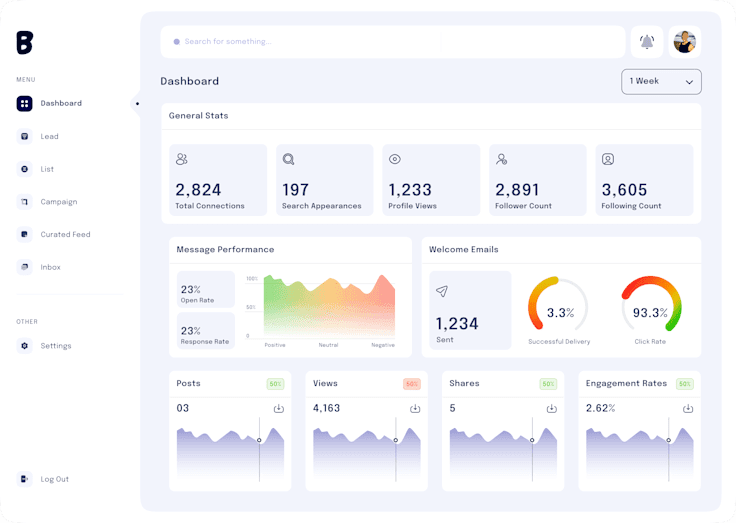
3. Data Density & Visualization: High-density interactive dashboards—like our work on the Blynk marketing cockpit—require specialized charting libraries, optimistic UI updates, and query optimization so large datasets load in milliseconds.
4. Regulatory Compliance & Security: FinTech, healthcare, and enterprise software require SOC2 readiness, HIPAA considerations, encrypted storage, and audit logs.
5. Design System Depth: Custom iconography, interactive clickable prototypes, micro-animations, and full dark/light theming.
3. Typical SaaS Budget Tiers: From MVP to Enterprise
Here is an honest breakdown of real-world project budgets based on typical scope requirements in our industry:
| Stage / Tier | Typical Investment | Timeline | What You Get | Target Audience |
|---|---|---|---|---|
| Sprint MVP / Prototype | $5,000 – $15,000 | 3 – 6 Weeks | Clickable Figma prototype, core user flow, Next.js frontend, authentication, basic database. | Pre-seed founders validating an idea or fundraising. |
| Commercial V1 Launch | $15,000 – $40,000 | 6 – 10 Weeks | Multi-tenant architecture, Stripe billing, comprehensive analytics cockpit, full responsive QA. | Funded startups or profitable companies launching a product line. |
| Enterprise / Scaling Platform | $50,000 – $120,000+ | 3 – 6 Months | High-density data streaming, custom API webhooks, advanced role-based permissions, SLA support. | Scale-ups replacing legacy software with high transaction volumes. |
5. How to Save 30-40% Without Sacrificing Code Quality
To maximize capital efficiency, adopt these three principles:
1. Prototype First in Figma: A layout change takes 10 minutes in Figma but 6 hours in frontend code. Validate every interaction with stakeholders in clickable prototypes before engineers write code.
2. Use Modern Component Primitives: Rather than hand-coding modal dialogs, accessible date pickers, or popovers from scratch, utilize headless primitives (Radix UI, Tailwind CSS) that are already accessible and battle-tested.
3. Partner With a Unified Design & Engineering Studio: Traditional setups hire a design agency, then transfer Figma files to a separate offshore engineering firm. The resulting miscommunications and spec rewrites typically inflate costs by 35%.
Conclusion
Building a successful SaaS application requires balancing bold ambition with disciplined financial reality. By focusing ruthlessly on solving one high-value problem with an intuitive interface, you can launch a revenue-ready product for a fraction of legacy agency rates.
Planning a SaaS product build or MVP?
Schedule a 20-minute discovery consultation with Codiest's senior product architects to map out your feature scope, timeline, and exact milestone budget.